The Bible is filled with passages that boldly declare the deity of Jesus Christ.
“In Him, all the fullness of deity dwells in bodily form.” – Colossians 2:9
“No one has seen God at any time, the only begotten God, who is in the bosom of the Father, he has explained Him.” – John 1:14
“Thomas answered and said to Him, ‘My Lord and my God!’” – John 20:28
“And He is the radiance of [God’s] glory and the exact representation of His nature.” – Hebrews 1:3
“But of the Son He says, ‘YOUR THRONE, O GOD, IS FOREVER AND EVER.’” – Hebrews 1: 8
These passages, and many more, are very clear declarations of the fact that Jesus is God. This is especially evident when they are set against their proper Old Testament background. Against the strict and obvious monotheism of the Old Testament texts, there is simply no genuine way to interpret such passages as anything other than a declaration of deity. They are either blasphemy or truth.
Other passages have a slightly more subtle declaration, but only at first glance. Once understood in light of their meaning, they are just as clear, if not even more, in their teaching that Jesus is God.
For instance, in John 8:58, Jesus tells the Jews listening to Him that, “Truly, truly, I say to you, before Abraham was born, I am.” They then pick up stones in an attempt to stone Him for the words. The words “I am” are a translation of the Greek words egō eimi. This explains the Jews’ reaction, as the words egō eimi are the very ones that the Greek translation of the Old Testament (the Septuagint) used of God when He revealed Himself to Moses in the burning bush, “I AM” (Exodus 3:14).
We could also mention how the Apostle Paul in I Corinthians 8:6-8 purposely draws from the Old Testament’s great declaration of monotheism, the Shema, and applies it to both the Father and the Son.1 Or, how the use of the Greek word kyrios, that is used to translate the divine name YHWH in the Septuagint, is used in the New Testament to declare Jesus as Lord (kyrios)2. And, of course, we could go on and on.
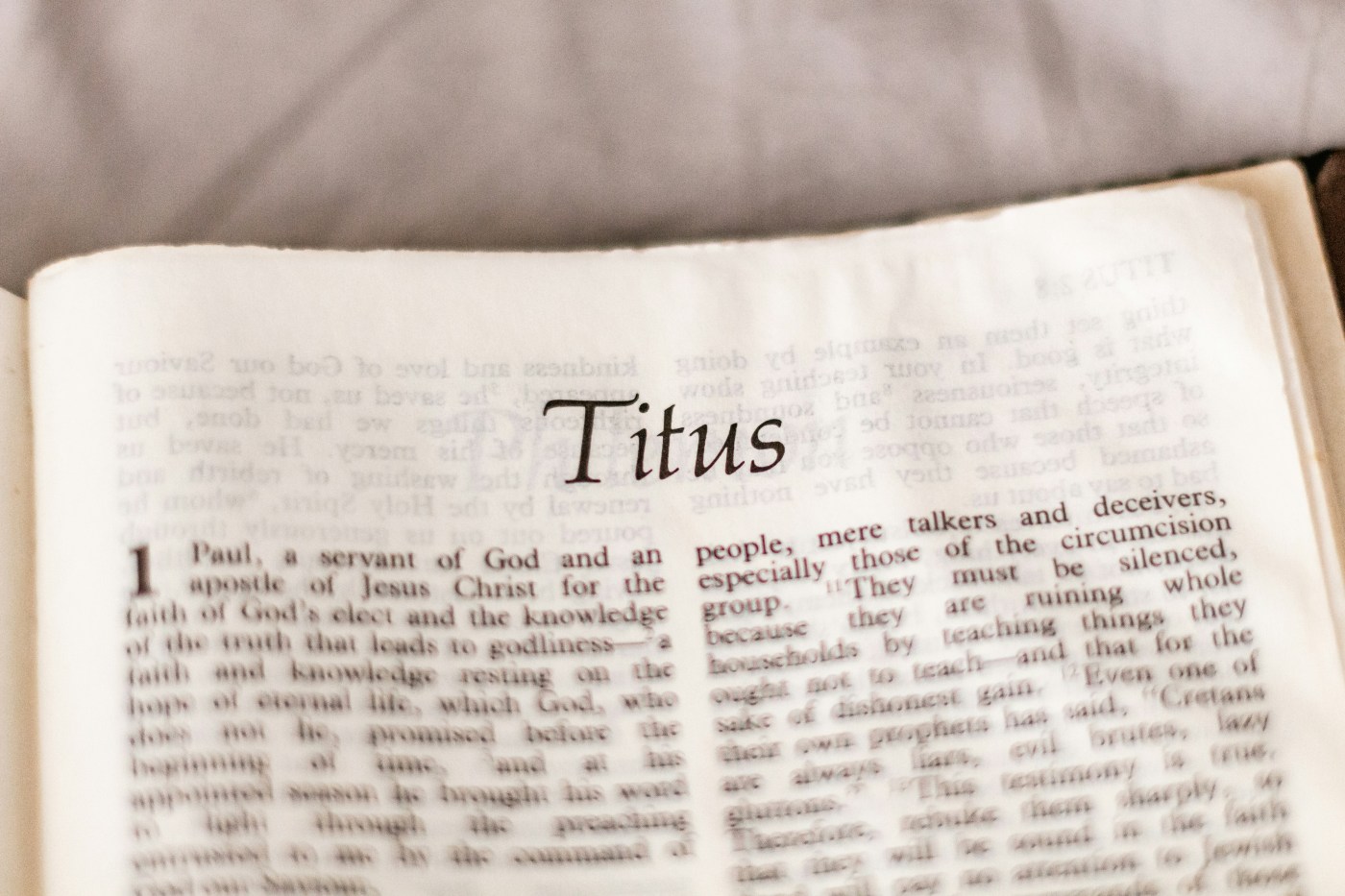
Titus 2:13
A full and complete defense of the deity of Christ is not the point of this article. Rather, we are going to focus in on one more specific passage that explicitly states that Jesus is God. The above points should sufficiently demonstrate that the doctrine of Jesus’s divinity certainly does not hinge upon Titus 2:13. However, when properly understood, it is just one more piece of evidence that adds to the cumulative weight of argument in favor of believing that the New Testament indisputably teaches that Jesus is God.
Titus 2:13 reads: “Looking for the blessed hope and the appearing of the glory of our great God and Savior, Jesus Christ.” It is sometimes disputed that the reference to the appearing of the glory of God is actually referring to God the Father, and only the word Savior refers to Jesus. However, theologian John Stott makes five points that argue in favor of both God and Savior being applied to Jesus Christ in this verse, and it therefore being another unambiguous declaration of Jesus’s divinity.3
- There is no definite article before the word Savior. Of course, this would seem to suggest that the one article that has been used covers both nouns. This is consistent with Greek grammar.
- The majority of ancient Greek scholars who interacted with this text interpreted both God and Savior as referring to Jesus. It is logical that those who actually used the language that Titus was written in would understand its basic principles and apply them correctly.
- Moving beyond grammar, we go to theology and context. Titus 2:13 is a reference to an epiphany (coming). There are ten (other) of these epiphany verses within the New Testament. Not one of them makes a reference to God the Father, but rather only to Jesus Christ. It seems highly unlikely that this passage is to be interpreted as being the only one, especially when it can so naturally be applied to Jesus Christ, as with all the rest.
- The verse that follows goes immediately to Jesus’s suffering and death, without direct reference to God the Father. It seems likely that the one person of Titus 2:13, Jesus Christ, flows naturally to the one person of verse 14.
- The phrase “God and Savior” was already a first-century religious term. Paul was not afraid to adapt religious language used by the gentiles and to properly apply it to the one true God (cf. Acts 17). This means that this phrase was indeed a phrase. It was an intentionally designed, religious idiom that made reference to a single subject. Once more, the subject is Jesus Christ.
Quoting Bishop Elliot, Stott writes that it is difficult to resist the conviction that “our blessed Lord is here said to be our megas Theos [‘great God’], and that this text is a direct, definite, and even studied declaration of the divinity of the Eternal Son.”4 Despite all of this evidence, even if the phrase referred to God and Jesus, in this verse Jesus would still be said to be the glory of God and as having accomplished His salvation. Which, if we know our Bibles at all, will also mean that He must have been God. “I am the LORD, that is My name; I will not give My glory to another” (Isaiah 42:8).
Know the Son
The Bible could not be clearer on the matter. Jesus is God. Through direct statements, by actions only attributable to God, with power and authority only held by God, with clarity and conviction, Jesus is declared to be God over and over again. There is no other conclusion that a genuine and studied reading of the New Testament will allow.
As Christians, we often give too much ground to skeptics and heretics who would deny this essential truth. We may act as if The Gospel of John is our only sure footing. We may stumble over one or two “proof texts” that are used to challenge us or erode our confidence. But, think about it, when this occurs, do we ask our opponents to hold to their own standards? They ask us to deal with a mole-hill while they ignore the mountain before them. As James White wisely states:
Christians often get so caught up in the “battle” that they lose sight of some basic considerations. When we encounter someone who denies the deity of Christ, we often “let them off the hook” by not asking them to defend their view on the basis of each passage we are considering. We don’t apply the same arguments to their position that they are applying to ours.5
I will never forget talking with a Jehovah’s Witness who had called me randomly on my cellphone. We had a long discussion, but she kept trying to imply that we really didn’t differ all that much in what we believed about Jesus. And yet, she would not worship Him. The idea repulsed her. As it should, if Jesus is not God, as Jehovah’s Witnesses believe. And yet, as the New Testament time and time again demonstrates, those who know Jesus also know that He is worthy of worship (cf. John 9:38). This is because He is God.
Finally, I couldn’t take it anymore, and I told her (gently but firmly) that only those who worship Jesus truly know Him. The anger that arose within her honestly scares me. It wasn’t even directed at me, as far as I could tell. No, much worse. It was anger at the idea of worshiping the Son of God, our great God and Savior, Jesus Christ. When it comes to Jesus, there is no middle ground. Indeed, as He says, “all will honor the Son even as they honor the Father” (John 5:23). He is either God or one of the greatest heretics who ever lived (I Cor. 15). As for me, I long for the day that I will behold Him as He is, and cry out: “My lord and my God!”
Notes
- James R. White, The Forgotten Trinity: Recovering the Heart of Christian Belief (Revised & Updated), (Bloomington, MN: Bethany House, 2019), 92-93
- N.T. Wright, The Resurrection of the Son of God (Minneapolis, MN: Fortress Press, 2003), 571
- John Stott, The Message of 1 Timothy & Titus: The Life of the Local Church Revised Edition (Downer Grove, IL: IVP Academic, 1996), 188-89
- Ibid.
- White, The Forgotten Trinity, 65
Further Reading
 Moore Thinking
Great post! I especially liked the following quote: As Christians, we often give too much ground to skeptics and heretics who would deny this essential truth.
LikeLiked by 1 person
I disagree with the view that one cannot be divine unless He is the one true God. The reason is I understand Christ to be God’s only begotten Son, divine by lineage.
The one true God is the source of all things, including His Son.
LikeLike
As the article discussed, to say that one can be divine and not be the one true God misses the entire thrust of the monotheism of the Old Testament. To say that someone else is divine except the one true God in the way that Christ is described to be divine in the New Testament completely divorces such declarations from their historical context.
LikeLike