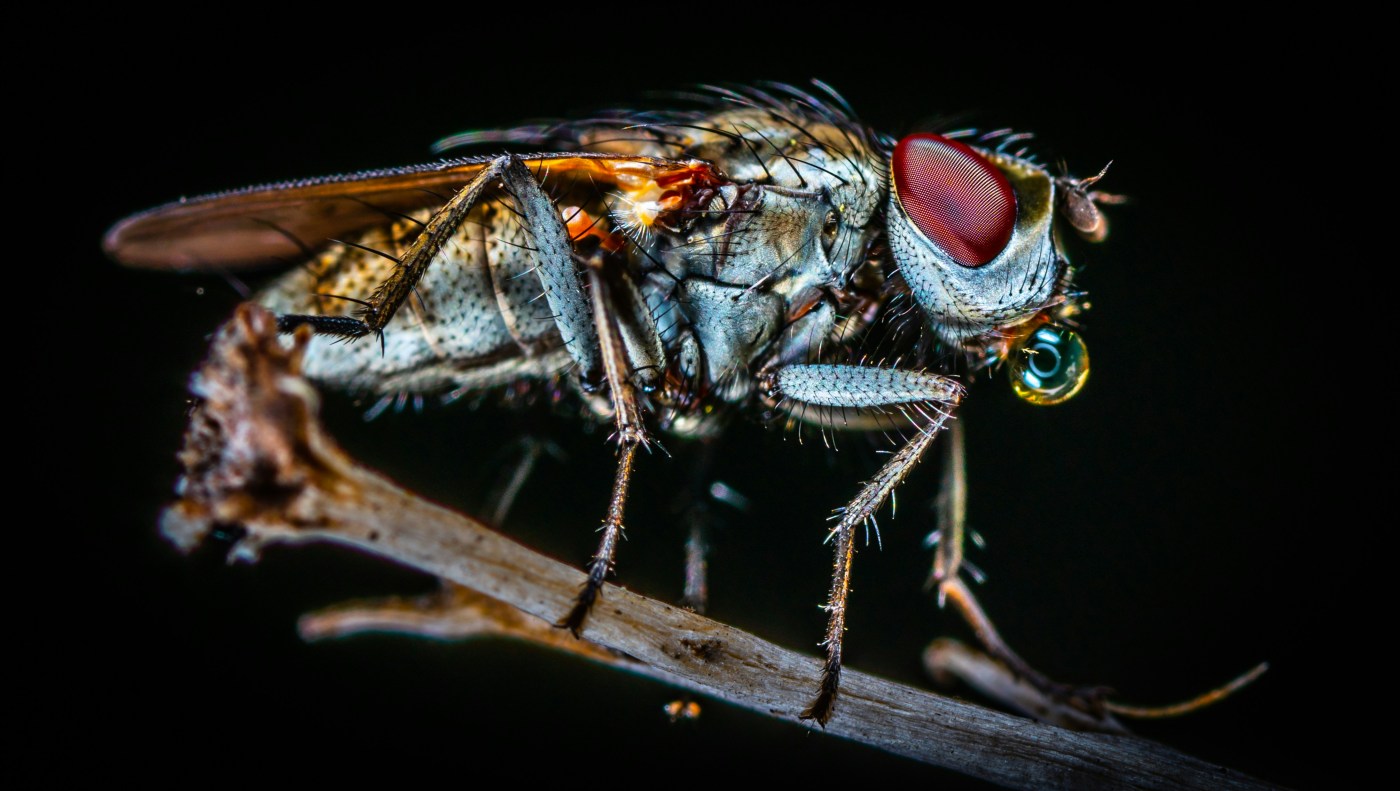
A picture is worth a thousand words. Although cliché, even as a writer, I have to admit a certain truth to this statement. And yet, there is also a great danger in a picture without a thousand words given to explain its meaning. How easily we can get the wrong idea from what an image leads us to believe about it. Words are still needed, especially if the picture or image is being used for educational purposes.
Icons of Evolution
This is the idea behind the late Jonathan Wells’s book Icons of Evolution. In it, he examines a variety of the most popular and persuasive images or icons of Darwinistic evolutionary theory and demonstrates how easily these pictures can mislead the common man. And, of course, that’s being generous. Some icons are so obviously false or misleading that they can be classified as intentionally misleading and fraudulent.
For instance, Haeckel’s infamous depiction of embryos where a variety of different vertebrate embryos are all drawn as looking extremely similar to one another in their so-called ‘first stage’. These drawings have been proven to be extremely exaggerated, and are based on a mid-stage of embryonic development rather than the greatly differing earlier stages. As the famous Harvard evolutionary biologist Stephen Jay Gould stated in reference to them: “We do, I think, have the right to be both astonished and ashamed by the century of mindless recycling that has led to the persistence of these drawings in a large number, if not a majority, of modern textbooks.”1
Two More Wings and No More Flight
This brings us to another, and more debated, icon of evolution: the four-winged fruit fly. Without appropriate context, the image is striking. Double the wings! Surely this little guy has evolved for some serious flying. That is the natural layman’s impression of this type of image. And, of course, when the image is utilized in science textbooks in the context of discussion on morphological change within evolution, the image packs a punch. Give me one thousand words saying the evolutionary mechanism of natural selection acting upon random mutations can produce significant morphological change within an animal, or, give me an image of a two-winged fruit fly morphed into a four-winged fly, and what has more persuasive power?
Now, the problem with this is that what the image does not demonstrate (regardless of what the words of the text may or may not say) is that this modified little bugger can’t fly—at least not nearly as well as his two-winged friends. This is because the second set of wings is non-functional. This is a fact that is not argued by those who are even critiquing writers such as Jonathan Wells on this particular issue.2 The second set of ‘wings’ do not have flight muscles.
Although the form of the wings is present, the function of what was ‘evolved’ has been lost. In a normal fruit fly, behind its set of wings is a pair of what are called ‘halteres,’ which are an important organ to ensure that the fly is able to balance properly during flight. Of course, on an image of our normal fly ,these look rather unimpressive when compared to a mighty set of full-fledged wings. But, sadly, engineering has never really cared about looks or size. Function is really all that matters. And, these balancers are serving their function for the fruit fly as-is, no modification needed. Without them, our little fruit-fly is going to die.
At this point, critics of Intelligent Design, such as the National Center for Science Education, will state, “The four-winged fruit fly is a classic example of how creationists misinterpret the genetic analysis of development. Developmental geneticists try to understand the role of a gene by modifying a gene and analyzing the consequences, so it is of little consequence that four winged flies would not survive in the wild.”3
But, please note, what is not being disputed is the significant scientific research and insights that can be gained through the “genetic analysis of development.” Marvelous insights can be gained through this kind of research. Though the ethics involved are another question, as we are genetically modifying an animal to make it functionally less fit for survival, which, at the very least, poses an interesting ethical question.
However, at least for the purposes of this article, the point being made is how careful we must be with the images associated with evolution. Not only because some (as mentioned above) have clearly been faked, but because others are so apt to mislead. This problem is only exasperated when the image is utilized in the context of discussion on the proofs being provided for evolutionary theory. What is being argued here is that more appreciation needs to be given to the power of an image. Therefore, more clarity ought to be provided on what the image does not demonstrate.
This is why Wells ends his book with an appendix which includes suggested textbook warning labels for each of the icons of evolution that he critiques. For our little fruit fly he suggests, “WARNING: Four-winged fruit flies must be artificially bred, and their extra wings lack muscles; these disabled mutants are not raw materials for evolution.” A bit punchy, but nevertheless, the intent of such a warning is that the image is appropriately checked. Whatever it is attempting to teach would not be hampered by such a warning, or by a similar, slightly more restrained one. The truth would be protected, and the image would not produce overconfidence in what it does or does not demonstrate. The layman, or even the impressionable science student, is protected from a false conclusion and false lasting impression. Because we all know, the average student will mainly just remember how that two-winged fly now has four wings…sure sounds like evolution, right?
Beware the Images and Icons
Science should always be the pursuit of truth. Those who are seeking truth ought never to be afraid to admit what their evidence does not demonstrate. If the overall theory is sound, why fear being rigorous to ensure that any particular evidence is only utilized for the purposes of what it actually proves? For too long and in too many ways, popular science has utilized images recklessly, which has shaped the public’s overall impressions beyond what the evidence for materialistic forms of evolution actually demonstrates. We have really blurred the lines between theories and facts.
Wells’s epigraph for Icons of Evolution was well-chosen. Once more, it is a quote from Stephen Jay Gould, and in his typical fashion, he eloquently reminds us and warns of the power of an image:
The iconography of persuasion strikes even closer than words to the core of our being. Every demagogue, every humorist, every advertising executive, has known and exploited the evocative power of a well chosen picture… But many of our pictures are incarnations of concepts masquerading as neutral descriptions of nature. These are the most potent sources of conformity, since ideas passing as descriptions lead us to equate the tentative with the unambiguously factual.4
Notes
- Quoted in: Jonathan Wells, Icons of Evolution: Science or Myth? Why Much of What We Teach About Evolution Is Wrong (Washington, D.C.: Regnery Publishing, 2002), 108-109
- National Center for Science Education, “The Four-Winged Fly,” October 14, 2008, https://ncse.ngo/four-winged-fly#:~:text=The%20four%2Dwinged%20fruit%20fly,not%20survive%20in%20the%20wild.
- Ibid.
- Quoted in: Wells, Icons of Evolution, viii
Further Reading
- Protein Folds and the Failure of the Neo-Darwinian Mechanism
- The Humility of Charles Darwin
- Non-Darwinian Theories of Evolution and What Christians Can Learn From Them
Photo by Егор Камелев on Unsplash
 Moore Thinking
Very interesting and thought-provoking post! You’re right, we have really blurred the lines between theories and facts.
LikeLiked by 1 person